



Cancer prevention is partly an antigen-selection problem: identify a target expressed by at-risk or precursor cells early enough, immunize against it, and let the primed immune system clear those cells before the invasive disease develops. If you are deciding whether it contains a company worth building, think about this before antigen-selection: what immune system will receive the vaccine?
Most cancers emerge in later life, after the host immune system has changed in ways that matter for both tumor surveillance and vaccine response. It changes the most actionable point of intervention, the populations in which a signal can be measured, and the enabling technologies the field may need.
We are therefore looking at three theses:
Immune aging is a meaningful constraint on cancer interception
At least part of this constraint can be measured or reversed
Sufficiently high-risk populations can make preventions biologically and clinically tractable.
This piece develops each of those in turn.
The thymus and the immune system
The thymus is the organ in which immature T cells reach maturity and are selected into a usable, self-tolerant repertoire. Each mature T cell carries a T-cell receptor (TCR), which recognizes a peptide fragment presented by a major histocompatibility complex (MHC) molecule. The resulting diversity is the search space from which the immune system can respond to infections, vaccines, and tumor-specific mutations that may not appear until decades later.
Its generative capacity starts to decline around age one and proceeds relentlessly. The thymic epithelial space shrinks at roughly 3% per year until middle age, then slower. By about age 50 the organ is mostly fat and by 70 its thymopoietic tissue is around 10% of the total. In a mouse, this would be a crisis, because mice keep their naive T-cell pool replenished almost entirely from fresh thymic output for life.
This is not the case for us humans. In 2012, den Braber and colleagues used deuterated-water labeling to track the actual kinetics of T-cell maintenance in mice versus humans: in mice the naive pool “was almost exclusively sustained by thymus output throughout their lifetime,” whereas in adult humans “the maintenance of the adult human naive T cell pool occurred almost exclusively through peripheral T cell division”.
As the thymus ages, an adult human keeps T-cell *numbers* up by photocopying the clones already in circulation, and peripheral division maintains the count. It cannot mint new specificities, because copying a page is not the same as printing a new one.
So, the library stops acquiring titles in your twenties and slowly loses them after. Britanova and colleagues measured the consequence with deep TCR-beta sequencing. Their estimates suggested a broad decline in repertoire diversity with age, from roughly 60-120 million distinct clonotypes in the first two decades of life to approximately 8-57 million after age 70, with measurable contraction already visible by midlife. These estimates are method-dependent, and they do not mean that older adults lose the ability to respond to every unfamiliar antigen. They do, however, imply a lower probability that rare, useful clones are present at sufficient frequency and fitness.
That distinction matters for cancer vaccines because they do not manufacture a new TCR repertoire. A vaccine tends to present selected tumor antigens so that rare pre-existing T-cell clones can be primed and expanded; in a patient with an ongoing antitumor response, it may also amplify existing clones or broaden the response by recruiting additional specificities. If the relevant clones are absent, exceptionally rare, or functionally impaired, better antigen prediction alone will not solve the problem.
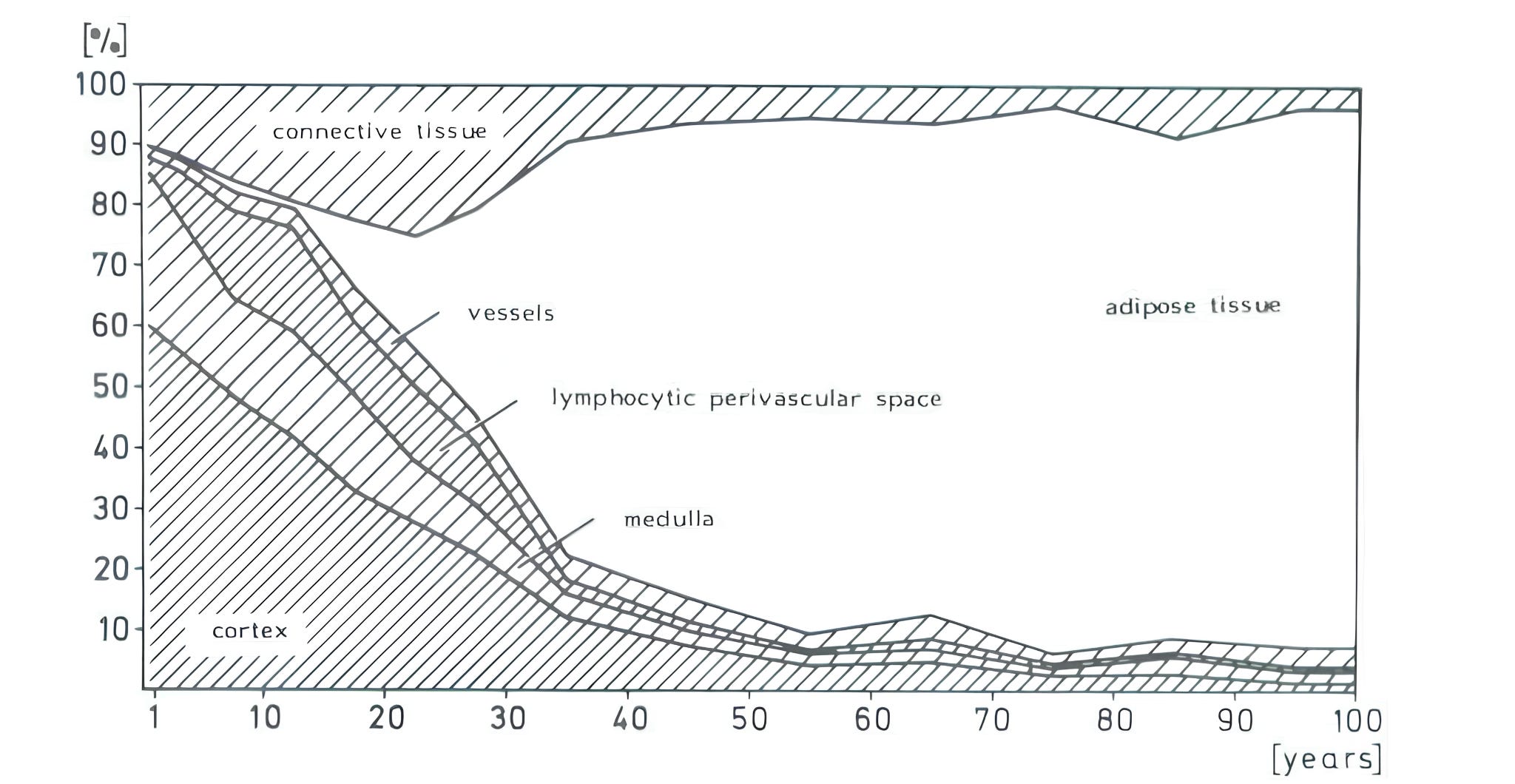
The irreversibility claim is strong but not absolute though. One TCR-sequencing study found that even patients over 70 receiving T-cell–toxic chemotherapy reestablished pre-treatment diversity, suggesting residual thymic rebound may persist. Britanova’s oldest subjects also showed unexpectedly higher diversity than their sixty-something cohort.
The thymus wasn’t vestigial after all
We could reasonably object: if the adult thymus is 90% fat and humans maintain their T cells peripherally anyway, who cares if it involutes if it already did its job?
In 2023, a study objected to that question. Patients who’d had their thymus removed in adulthood, mostly during cardiac surgery, were compared to matched surgical controls who kept theirs. If the involuted thymus were truly spent, removing it should cost little.
Unfortunately, it cost a great deal. Five-year cancer risk was 7.4% versus 3.7%, a relative risk of 2.0, and that doubling held after excluding preoperative cancer, thymoma, and autoimmune disease. Thymectomized patients made fewer new T cells and carried a pro-inflammatory cytokine signature. A follow-up from the same group against a separate control population of more than 62,000 reproduced the signal. This is observational data, and confounding by indication is a real caveat the authors acknowledge. But it is large, matched, and replicated. The adult thymus is not disposable even though it may be diminished.
Weakness was not the biggest problem
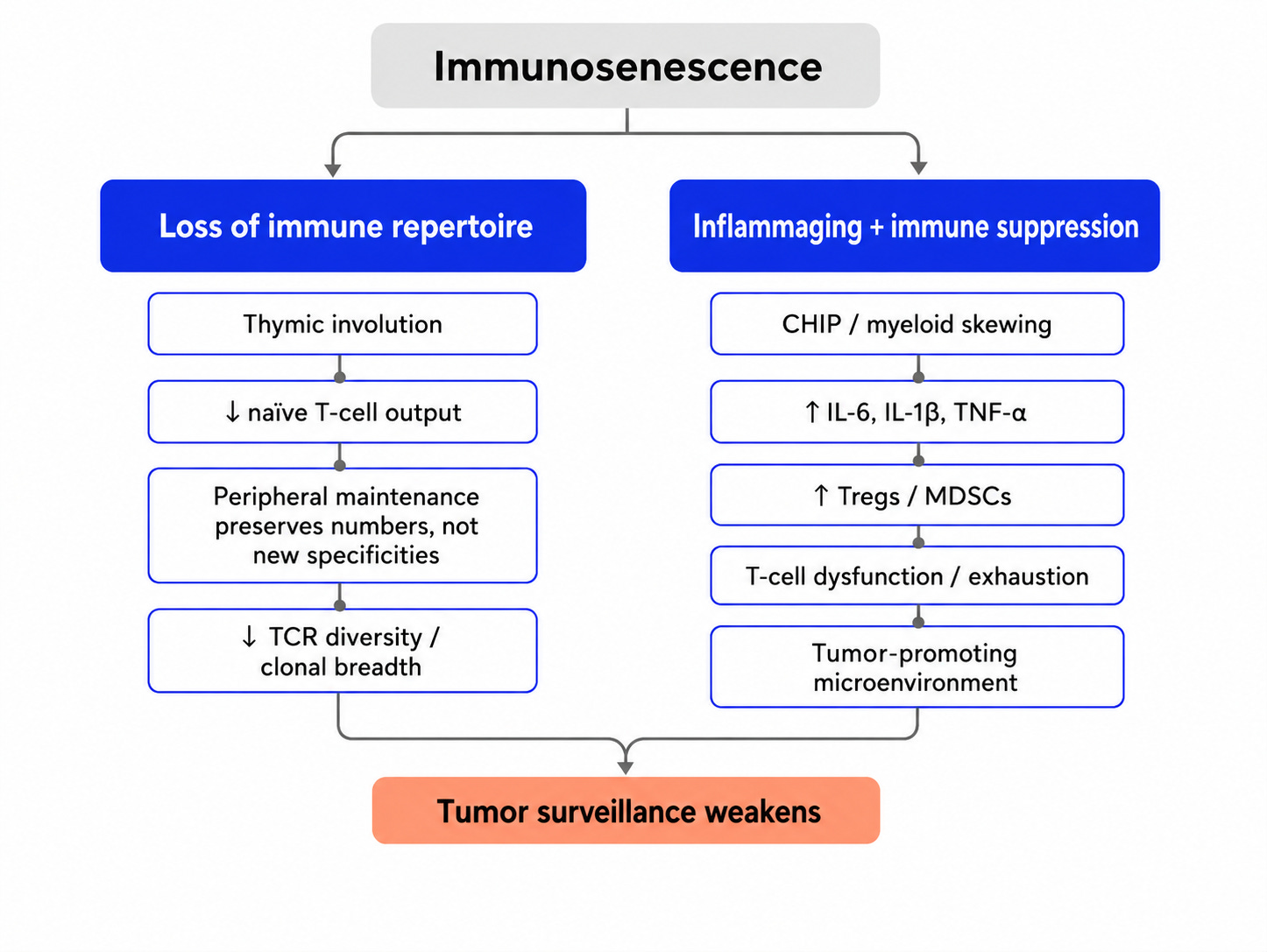
So far the story is depletion. If that were all, the prescription would be obvious and boring. However, the aging immune system also gets actively repurposed against you - it creates an environment that supplies assistance to tumors.
As we age, hematopoietic stem cells (HSCs) acquire somatic mutations, and some of those mutant clones, most often in TET2, DNMT3A, ASXL1, or JAK2, expand to colonize a measurable fraction of the blood. This is CHIP, clonal hematopoiesis of indeterminate potential, present in under 1% of people before 40 and around 10% by 70. Jaiswal’s 2017 follow-up showed CHIP carriers had roughly twice the risk of coronary heart disease, and in patients under 50, four times the risk of early myocardial infarction.
In the case where mutant HSCs differentiate into myeloid cells, those mutant myeloid clones produce macrophages with elevated inflammasome activation, pumping out IL-1β and IL-6. Aging hematopoiesis becomes a built-in inflammation generator. That chronic, sterile, low-grade inflammation is called inflammaging. The same cytokines that accelerate atherosclerosis (IL-6, IL-1β, TNF-α) build a microenvironment that favors tumor proliferation, angiogenesis, and metastasis.
Aging is also associated with expanded or more suppressive myeloid-derived suppressor-cell states (MDSCs). In one study, MDSCs from older donors suppressed T-cell proliferation more efficiently than those from younger donors. Some studies also report changes in regulatory T-cell abundance and accumulation of terminally differentiated or exhausted T-cell phenotypes. “Exhaustion” here refers to a state induced by prolonged antigen stimulation in which T cells progressively lose proliferative and effector capacity, and the marker expression alone does not prove irreversible dysfunction.
Put it together and the aged niche supplies growth signals, pro-angiogenic signals, and active immunosuppression all at once. It’s worth noting that many cell-specific causal mechanisms still rest on animal models or ex vivo systems, and human data are strongest for associations among age, CHIP, inflammation, immune composition, and clinical outcomes. All in all, the shape is clear that we are battling a system that gets slower while also switching sides.
Can we refill the thymus?
If loss of repertoire is one way aging opens the door to cancer, the intuitive move is to refill it. Regrow the thymus and restore the diversity.
A 2026 Nature Biotechnology news feature documents a cluster of companies attempting to regenerate the thymus directly or recapitulate its function. The mechanistic targets are sex-steroid inhibition (sex steroids are toxic to thymocytes, and chemical castration restores thymic size in rodents), IL-7, keratinocyte growth factor, IGF-1, and FOXN1 being the master thymic-epithelial transcription factor whose decline drives thymic shrinkage. FOXN1-reprogrammed fibroblasts have regenerated the aged mouse thymus with restored thymopoiesis.
The headline human data is the TRIIM trial. Nine men, aged 51 to 65, were given recombinant human growth hormone plus DHEA and metformin for about a year. They have reported MRI changes consistent with reduced thymic fat and a mean epigenetic age about 1.5 years below baseline across four clocks.
Read that sentence and the problem reads itself: There were nine men with no control arm, and men only. The epigenetic-age reversal and thymic regrowth claims remain exploratory and unreplicated. TRIIM is provocative, and the larger personalized-dosing follow-up TRIIM-X is running, but this is a pilot with a relatively weaker evidence tier and it cannot yet bear the weight people want to put on it.
An impactful company in this area would need a much tighter chain of evidence: increased thymic output; expansion of genuinely new clonotypes; improved response to a defined vaccine challenge; durability; and a safety profile that does not exchange immune aging for autoimmunity, pathological inflammation, or expansion of premalignant clones. Thymic rejuvenation is an interesting biological phenotype rather than a deployable cancer-prevention strategy until that chain is shown in controlled human studies.
The case for vaccinating earlier
Cancer vaccines are designed to induce or amplify adaptive immune responses against antigens expressed by malignant or premalignant cells. Depending on the antigen and the patient’s existing immune repertoire, they may expand rare tumour-reactive T-cell clones, prime previously inactive naïve T cells, or strengthen responses that are already present but insufficient. The practical questions of antigen selection, neoantigen prediction, MHC presentation, and vaccine manufacture are covered in detail by Abhishaike in his cancer-vaccine essay at Owl Posting. This piece focuses on a different problem: as immune repertoire diversity and T-cell function decline with age and disease progression, at what stage is vaccination most likely to generate a durable and clinically meaningful response?
Forty years, few approvals
Therapeutic cancer vaccines stimulate the patient’s immune system to fight against cancer cells, and are often approached either from a personalized angle or off-the-shelf. They have been in development for roughly four decades, and the approved list is short enough to be stated in full.
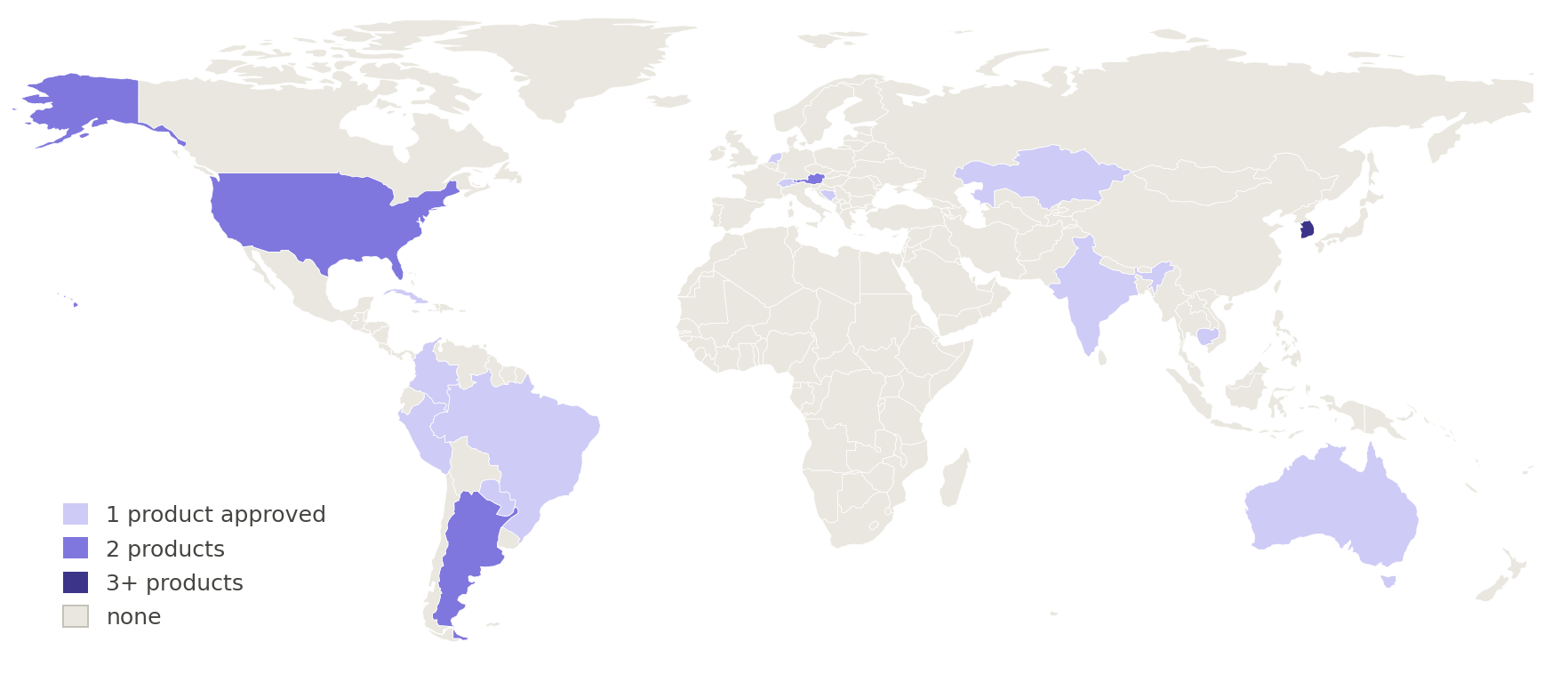
Sipuleucel-T (Provenge), an autologous dendritic-cell product for metastatic prostate cancer, was approved in 2010 on a four-month median survival benefit and later withdrawn in Europe for commercial reasons. CIMAvax-EGF, a recombinant EGF vaccine for lung cancer, is approved across a cluster of Latin American and Central Asian countries but never advanced past early-phase testing in the US. Tertomotide, a telomerase peptide vaccine, is approved for pancreatic cancer in South Korea.
The late-stage pipeline is interesting to address. In Phase 3, there is essentially one program generating real excitement: mRNA-4157 (V940, intismeran autogene) from Moderna and Merck, an individualized neoantigen mRNA vaccine. Its Phase 2b melanoma data is the best the field has produced, a 44% reduction in recurrence or death when added to pembrolizumab, strengthening to a reported 49% reduction at five years. Tedopi, a peptide vaccine for post-checkpoint lung cancer, is also Phase 3. DCVax-L for glioblastoma completed a Phase 3 that remains methodologically contested.
And the field’s other exciting candidate, autogene cevumeran (BNT122) from BioNTech and Genentech, the one behind the striking 2023 pancreatic-cancer paper, is still Phase 2. UV1, a telomerase peptide vaccine, missed its primary endpoint in melanoma in 2024.
There’s a large, crowded development field, the overwhelming majority of candidates clustered at Phase 2, converting to late-stage success rarely, and producing approvals rarer still and mostly in narrow niches.
Also, advanced disease is the worst possible setting to ask an aging immune system to mount a new, high-quality T-cell response. The tumor burden is high, which means chronic antigen exposure and T-cell exhaustion. The microenvironment is immunosuppressive by design, full of regulatory T cells, myeloid-derived suppressor cells, and checkpoint ligands. The host repertoire has also already narrowed. You are asking a depleted immune system to generate a fresh, sustained attack under the conditions that suppress it.
Which is what makes the recent shift so interesting. The strongest signals in the field now come from the adjuvant setting (after surgery) when the tumor bulk is gone and only minimal residual disease remains. The logic is that lower burden means less exhaustion, a less hostile microenvironment, and a more intact host immune system to work with. By the time a tumor is cut out, immune editing, exhaustion, and local suppression may already have begun, but surgery removes the largest source of ongoing antigen load and microenvironmental suppression and leaves a setting where vaccination has a more plausible chance to expand useful T-cell clones.
If vaccines look more credible once tumor burden is reduced, the natural next question is whether they would work better still before a suppressive tumor niche exists at all. Why stop at the moment of surgery? Why not act before there is a tumor?
Actually, that approach is the hardest to test.
The cleaner bet is the harder trial
There exists a proof-of-concept. Nous-209 is an off-the-shelf vaccine encoding 209 shared frameshift-peptide neoantigens that recur across mismatch-repair-deficient tumors, and it’s being tested for cancer interception in Lynch syndrome, people who carry a germline predisposition but aren’t yet sick. In the early data, vaccination was safe, with neoantigen-specific responses in 100% of the 37 evaluable carriers, still detectable at one year in 85%.
Lynch syndrome is the ideal case and it shows why prevention is so hard everywhere else. These carriers have a known, high, near-term cancer risk, which is the only thing that makes a prevention trial tractable: you can enroll people likely to develop cancer soon, use shared neoantigens you can manufacture off the shelf, and read out an answer in a feasible window. To prove a preventive vaccine works in an average-risk population, you need enormous samples, long timelines, and an unforgiving safety bar, because your subjects are healthy and will (hopefully) stay healthy for years regardless of what you give them.
More broadly, the field is reaching past Lynch syndrome. There are now interception trials in acquired pre-cancer, for example a mutant-KRAS vaccine in patients with high-risk pancreatic cysts, where longitudinal TCR sequencing showed persistence of vaccine-induced mKRAS-specific clonotypes for up to 2 years with no participants developing PDAC with a median follow-up of 16.5 months. There are parallel efforts in colorectal and breast pre-cancer. These are a step further out on the risk curve than Lynch carriers as the predisposition of legion isn’t inherited. If the prevention logic of targeting the at-risk population defined by a precursor lesion holds, the addressable population for prevention widens considerably.
This is the crux: The immunology points one way and the economics point the other. The immunology says vaccinate early into the intact repertoire. The economics of clinical trials say you can only easily prove it where risk is concentrated enough to read out in the rare populations that look least like the general case.
Conclusion
The obstacle is two things that reinforce each other.
The first is biology. Most cancers offer private mutations that demand individualized manufacturing. Presentation doesn’t guarantee immunogenicity. On top of that, the immune system you’re vaccinating, if you wait until cancer risk is high enough to justify the trial, is the depleted, inflammaging-remodeled, MDSC-rich system least able to respond. The biology that makes prevention necessary is the biology that makes it hard.
This also explains why, even as Merck and Moderna push the field forward, ADCs, bispecifics, and CAR-T remain more attractive to many pharma teams. The primary reason is that those modalities work reliably and most vaccines still don’t. Solve that, and interest should follow. However, efficacy mostly applies to the therapeutic vaccines that compete head-to-head with those modalities.
For preventive vaccines a second obstacle waits behind it, which is legibility. Prevention is worth the most exactly when it’s hardest to measure, because the payoff is a cancer that never happens years downstream in a person who feels fine today. That non-event is almost invisible value, it doesn’t fit a trial endpoint, a reimbursement model, or a patient’s sense of urgency. Sipuleucel-T extends life by four months in people who are already sick, and it got approved and reimbursed. A vaccine that prevents the cancer entirely, a decade early, in someone healthy, has no comparably legible path, even though it’s worth incomparably more.
There is a partial escape. The reason prevention is illegible is that its endpoint takes years to confirm, so a surrogate that read out earlier could rewrite the economics. Molecular residual disease is a potential candidate surrogate in the treatment setting, with ctDNA already being tested or used to track recurrence risk and treatment response across several cancers. For prevention it is not there yet, and the NHS-Galleri trial’s recent failure to meet its primary endpoint shows how far. Whether ctDNA gets there is an open question and an exciting space to watch!
The biology pushes you to intervene early, which pushes you into healthy populations, which is exactly where the value is illegible and the trials unfeasible today. The illegibility in turn starves the early-prevention research that might crack the biology.
Our immune system depletes on its own schedule, and the evidence we’d need to act arrives on a much slower one.
Acknowledgement
A huge thank you to my co-writer, Samuel Hume, whose countless back-and-forth discussions shaped this article; to Britta Srivas, Alpkaan Celik, and Maryam Hasanova for building and researching deeply in the field and generously sharing their expertise and insights; to age1 crew for the support throughout.
See you next time!


Excellent post and appreciate the time and detail you put into it. I follow with a lot of interest the emerging science of cancer interception. I think immune signatures and omics might provide a surrogate in the next few years whereas ctDNA is the best we can do with current technology.